If you have ever walked away from a doctor’s office with “normal” lab results but still felt exhausted, foggy, or inexplicably off, you already know that health is more than a set of numbers on a chart. This is where TCM views organ health in a fundamentally different way from Western medicine — and for millions of people worldwide, that difference has been life-changing.
Traditional Chinese Medicine does not see your organs as isolated mechanical parts that either “work” or “fail.” Instead, TCM organ health is understood as a living ecosystem where every organ is connected, interdependent, and deeply influenced by your emotions, diet, seasons, and daily rhythms. When one organ falls out of balance, the entire system feels it. The goal of TCM is not simply to treat symptoms but to restore harmony across all five organ systems — because when TCM views organ health holistically, the body can heal itself from the inside out.
What Are the Five Core Organs in TCM and Why Do They Matter?
In Traditional Chinese Medicine, the five zang organs — the Heart, Liver, Spleen, Lungs, and Kidneys — are far more than their anatomical definitions. Each one is a functional network governing not just physical processes but also emotional states, sensory functions, and even spiritual vitality. Understanding how TCM views organ health through these five systems is the first step toward real, lasting wellness.
The Heart (心): Emperor of the Body
In TCM, the Heart rules blood circulation and houses the Shen, or spirit. It is considered the sovereign ruler — when TCM organ health is strong in the Heart, you sleep deeply, think clearly, and feel emotionally calm. A Heart imbalance may show up as insomnia, anxiety, or heart palpitations. The Heart corresponds to the Fire element and the color red.
The Liver (肝): The Free-Flowing General
The Liver is responsible for the smooth flow of Qi (vital energy) and blood throughout the entire body. It also stores blood when you rest and releases it during activity. When TCM views organ health through the Liver, it looks for signs of stagnation — irritability, PMS, headaches, tight shoulders, or a feeling of being “stuck” in life. The Liver belongs to the Wood element and connects to the color green.
The Spleen (脾): The Digestive Powerhouse
Unlike in Western anatomy, the TCM Spleen is the center of digestion and nutrient absorption — it transforms food into Qi and blood. A strong Spleen means steady energy, clear thinking, and easy digestion. When TCM organ health is compromised in the Spleen, you may experience bloating, fatigue after eating, loose stools, or a tendency to overthink and worry. The Spleen is governed by the Earth element and the color yellow.
The Lungs (肺): The Master of Qi and Breath
The Lungs govern respiration and control the body’s Defensive Qi, which is your immune barrier against external pathogens. They also regulate water metabolism and open into the nose and skin. In TCM organ health, strong Lungs mean a robust immune system and clear, glowing skin. Weak Lung Qi often appears as frequent colds, allergies, shortness of breath, or lingering grief and sadness. The Lungs correspond to the Metal element and the color white.
The Kidneys (肾): The Root of Life
The Kidneys are arguably the most treasured organ system in TCM — they store Jing, your constitutional essence inherited from your parents, and govern growth, reproduction, and aging. They also control bones, hearing, and willpower. When TCM views organ health through the Kidney lens, chronic low back pain, premature graying, fertility issues, or deep-seated fear can all point to a Kidney imbalance. The Kidneys belong to the Water element and the color black.
Why Do Emotions Play Such a Critical Role in TCM Organ Health?
One of the most fascinating aspects of how TCM views organ health is the direct link between specific emotions and specific organs. Anger injures the Liver. Excessive joy or agitation disturbs the Heart. Worry and overthinking damage the Spleen. Grief and sadness weaken the Lungs. Fear and shock deplete the Kidneys.
This is not metaphor — in TCM, emotional stress literally blocks the flow of Qi through its corresponding organ meridian, creating physical symptoms over time. That tightness in your chest during a stressful month is your Liver Qi stagnating. That knot in your stomach before a big presentation is your Spleen under siege. This is why any serious approach to TCM organ health must address emotional wellbeing alongside diet and exercise.
Can the Five-Color Diet Really Support Your Organs?
Yes — and it is simpler than it sounds. For centuries, practitioners have used color-coded foods to nourish specific organ systems, and modern nutritional science increasingly validates why these foods work.
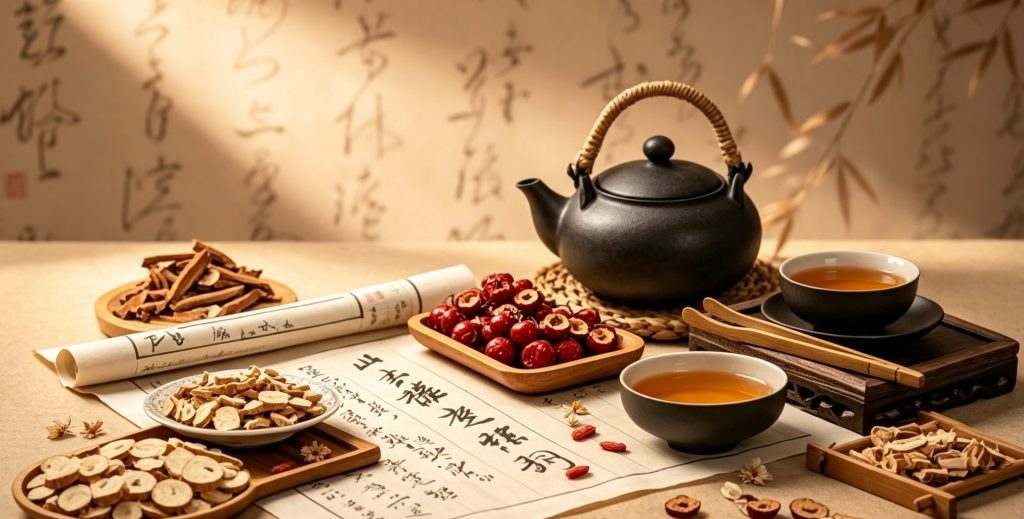
Red foods like goji berries, red dates, and tomatoes support the Heart. Green foods such as spinach, kale, and celery nourish the Liver. Yellow foods including pumpkin, sweet potato, and millet strengthen the Spleen. White foods like pear, lotus root, and daikon radish benefit the Lungs. Black foods — black sesame, black beans, walnuts — feed the Kidneys.
When TCM views organ health through diet, it does not ask you to count calories or macros. Instead, it asks you to eat a rainbow of seasonal, whole foods that align with your body’s current needs and constitutional type. A person with Liver Qi stagnation may benefit from more green leafy vegetables and sour flavors, while someone with Kidney deficiency might focus on warming black-colored foods and salty broths.
What Daily Habits Strengthen TCM Organ Health?
Restoring TCM organ health is not about radical overhauls. It is about small, consistent choices that compound over time.
Prioritize sleep. The TCM organ clock maps each organ to a two-hour window of peak activity. The Liver detoxifies between 1 AM and 3 AM, which means consistently staying up past midnight directly burdens your Liver function. Aim for seven to eight hours of quality sleep, ideally before 11 PM.
Move with intention, not intensity. Gentle, flowing exercise like walking, tai chi, or yoga moves Qi and blood without depleting your reserves. Aim for at least 150 minutes of moderate movement each week.
Guard your emotional landscape. Since TCM organ health is inseparable from emotional balance, practices like meditation, journaling, or simply spending time in nature are not luxuries — they are organ medicine.
Get regular checkups that look deeper. Annual physical exams are wise, but also consider working with a licensed TCM practitioner who can read your pulse and tongue to catch subtle imbalances long before they show up on a blood test.
What Does “Prevention First” Mean in TCM Organ Health?
Perhaps the most powerful principle in Chinese medicine is zhi wei bing — treating disease before it arises. This is the cornerstone of how TCM views organ health: not as damage control, but as lifelong cultivation. A skilled TCM practitioner does not wait for illness to declare itself. They notice the faint signs — a slight change in tongue coating, a subtle shift in pulse quality, a recurring emotional pattern — and adjust your diet, herbs, and lifestyle accordingly.
This preventive wisdom is precisely what makes TCM organ health so relevant to modern life. In a world of chronic stress, processed food, and constant screen time, minor imbalances accumulate silently for years before erupting as diagnosable disease. TCM gives you the language and the tools to listen to your body before it has to scream.
Your body is not a machine waiting to break down. It is an intelligent, interconnected ecosystem, and when you learn to care for it the way TCM views organ health — with patience, attentiveness, and reverence for the whole — you tap into the oldest and most enduring secret of vitality.